
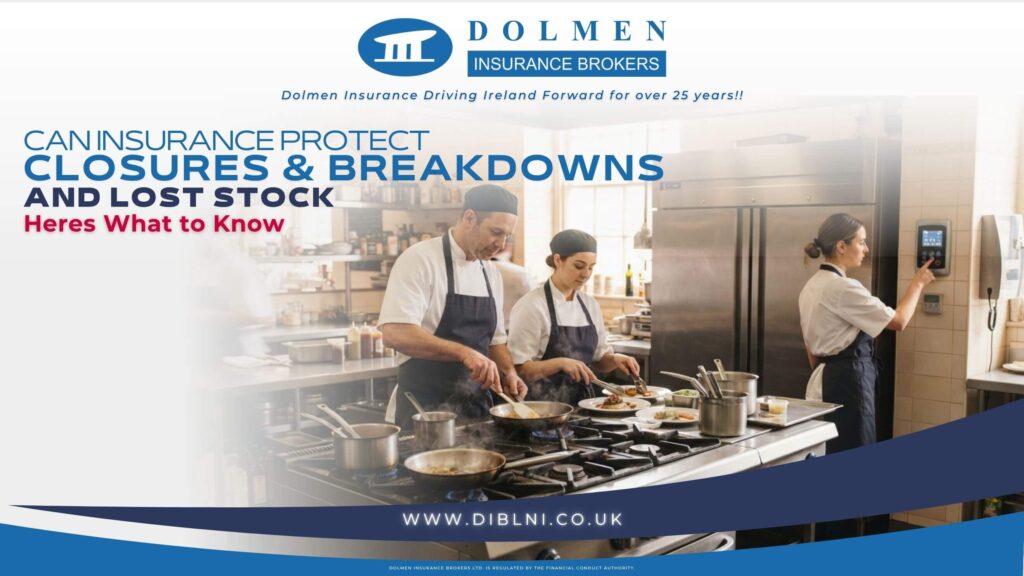
Restaurants rely on specialist equipment, fresh stock and the ability to trade consistently. A kitchen fire, freezer failure or major equipment breakdown can create costs far beyond the initial physical damage.
Replacing damaged property may only be part of the problem. The restaurant could also lose income while continuing to pay rent, wages and other fixed expenses.
Suitable insurance can help a restaurant recover, but business owners should understand which losses are covered and whether their policy limits are sufficient.
Deterioration of Stock Cover
Restaurants often hold significant quantities of refrigerated or frozen food.
If a refrigerator or freezer fails, a considerable amount of stock could become unusable within a short period. Deterioration of Stock cover may help with the cost of replacing stock damaged following certain insured events, such as an unexpected change in temperature.
The precise protection varies between policies. Cover may depend on:
- The cause of the temperature change
- The age and condition of the equipment
- Whether the equipment was properly maintained
- The value of the damaged stock
- Any applicable policy excess
- The financial limit selected
Certain causes, such as poor maintenance, wear and tear, deliberate disconnection or some forms of utility failure, may be excluded.
Restaurant owners should check both the maximum amount covered and the circumstances in which a claim may be accepted.
Equipment Breakdown Cover
Commercial kitchens depend on specialist machinery and electrical equipment.
An unexpected breakdown involving an oven, extraction system, boiler, dishwasher, refrigerator or freezer could disrupt service or force the restaurant to close temporarily.
Equipment Breakdown insurance may help with repair or replacement costs following certain mechanical or electrical failures.
However, insurance does not replace regular maintenance. Gradual deterioration, corrosion, wear and tear or damage caused by inadequate servicing will not normally be covered.
Restaurants should keep appropriate records of:
- Equipment servicing
- Electrical inspections
- Gas-safety checks
- Extraction-system cleaning
- Repairs and replacement parts
- Refrigeration temperature checks
Keeping accurate records can also help demonstrate that reasonable maintenance procedures were followed.
Business Interruption Insurance
Property insurance may cover insured physical damage to the building, contents or equipment, but it will not necessarily replace the income lost while the restaurant is unable to trade.
Business Interruption insurance may provide protection following an insured event, such as a serious fire or flood.
Depending on the policy, it may help cover:
- Lost gross profit or revenue
- Staff wages
- Rent and other fixed costs
- Additional operating expenses
- The cost of temporary premises
- Professional fees involved in preparing a claim
Business Interruption insurance usually depends on there being an insured event covered under the relevant property section of the policy. It does not protect against every reason a restaurant may be unable to open.
Choosing an Appropriate Indemnity Period
The indemnity period is the maximum period for which the Business Interruption policy will respond following an insured event.
A restaurant may need time to:
- Assess the damage
- Obtain planning or building approvals
- Complete repairs
- Replace specialist kitchen equipment
- Arrange inspections
- Recruit or retrain staff
- Rebuild its customer base
A 12-month indemnity period may not always be sufficient, particularly following significant damage.
Restaurant owners should consider how long it could realistically take to restore the business to the position it would have been in had the incident not occurred.
Fire, Flood and Escape-of-Water Damage
Fire is one of the most serious risks faced by restaurants. Cooking oils, high temperatures, extraction systems, gas appliances and electrical equipment can all contribute to the risk.
Insurers may apply conditions relating to:
- Extraction-system cleaning
- Deep-fat fryer thermostats
- Fire-extinguishing equipment
- Waste and oil storage
- Gas and electrical inspections
- Fire doors and escape routes
- Staff training
- Fire-risk assessments
Failing to comply with important policy conditions could affect a claim.
Flooding and escape of water can also damage stock, flooring, furniture, electrical systems and kitchen equipment. Restaurants should review their cover and understand any excesses or flood-related restrictions.
Money and Theft Cover
Restaurants may hold cash on the premises or transport money to and from a bank.
Money insurance may cover business funds:
- In a locked safe
- Elsewhere on the premises
- In transit to or from a bank
- At the home of an authorised employee in specified circumstances
Insurers may set different limits depending on where the money is held.
Theft cover may also protect equipment, contents and stock following an insured break-in. Security conditions may require particular locks, alarms, safes or cash-handling arrangements.
Restaurant owners should ensure that these requirements reflect the security measures actually in place.
Common Insurance Mistakes
Restaurant owners can unintentionally leave their businesses exposed by:
- Underestimating the value of refrigerated or frozen stock
- Assuming all freezer failures are automatically covered
- Choosing an inadequate Business Interruption indemnity period
- Failing to include continuing wages and fixed expenses
- Not updating equipment values after a refurbishment
- Failing to service equipment or retain records
- Overlooking security and fire-safety conditions
- Selecting insurance based only on the premium
The cheapest policy may not provide the level of protection the restaurant needs.
Will Insurance Replace Income if a Restaurant Has to Close?
Business Interruption insurance may replace certain lost income following an insured event, such as insured fire or flood damage.
It will not cover every type of closure. The policy wording, selected indemnity period, financial basis of cover and underlying cause of the interruption will all be important.
Can Insurance Cover Food Lost After a Freezer Breakdown?
Deterioration of Stock cover may protect refrigerated or frozen food following certain insured events.
Restaurant owners should check the causes covered, stock limit, equipment requirements and applicable excess. A breakdown caused by wear and tear or poor maintenance may not be covered.
Finding Restaurant Insurance in Northern Ireland
When comparing restaurant insurance, it is important to consider how the business would cope if it could not trade normally.
Stock limits, equipment cover, maintenance conditions and the Business Interruption indemnity period should all be reviewed carefully.
At Dolmen Insurance Brokers, we can assess these risks, review your existing protection and compare restaurant insurance options from a panel of insurers.
Our team can help you consider not only the cost of repairing physical damage, but also the potential loss of income and continuing expenses while your restaurant recovers.
Contact Dolmen Insurance Brokers on 028 9601 6840 or email info@diblni.co.uk to discuss your restaurant insurance requirements.
Disclaimer
The information provided in this blog is for general guidance and informational purposes only. While every effort has been made to ensure accuracy at the time of publication, Dolmen Insurance Brokers Limited accepts no responsibility for any errors, omissions or changes in legislation. Insurance policies and cover requirements may vary depending on individual circumstances. This blog does not constitute legal, financial or insurance advice.
Readers should seek professional advice tailored to their particular circumstances before making any insurance decisions.
Dolmen Insurance Brokers Limited is authorised and regulated by the Financial Conduct Authority under Firm Reference Number 978635.